How We Shot Good Bad Things on a Micro Budget
The Crew Was Me
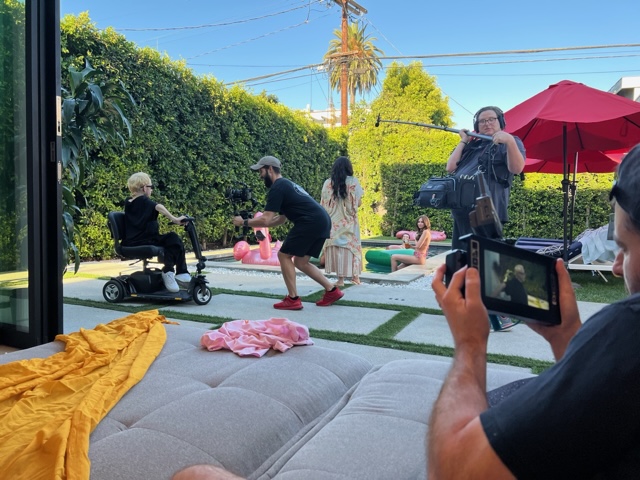
Good Bad Things was not a traditional shoot. Shane Stanger and I were connected through our mutual friend, filmmaker Sean Crampton, and from our very first conversation the reality was clear: the camera, grip, and electric budget was tiny. I told Shane that for what he had, we couldn't afford a traditional crew or a traditional approach. Instead, I suggested we embrace a hardcore indie, almost high-school style of filmmaking.
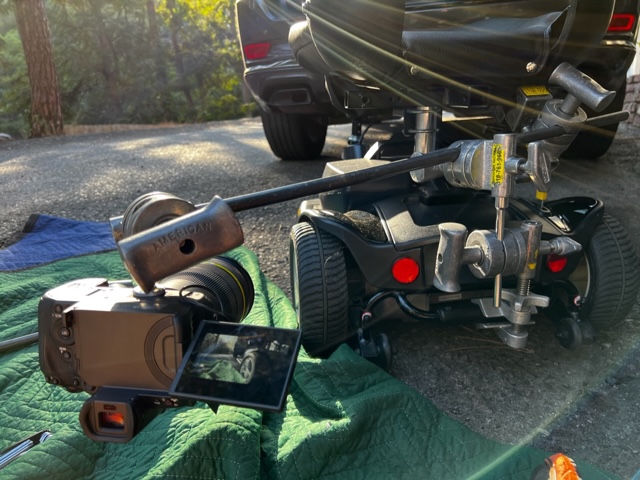
So I became the entire department. Cinematographer, camera operator, focus puller, gaffer, key grip, and DIT. My crew was three young women in their twenties who came on as camera production assistants. On day one of the shoot, I taught them what a C-stand was. By day 40, they were setting up a 6x6 half soft frost on their own. That's a crew origin story I'm genuinely proud of.
Seeing The World Through Danny's Eyes
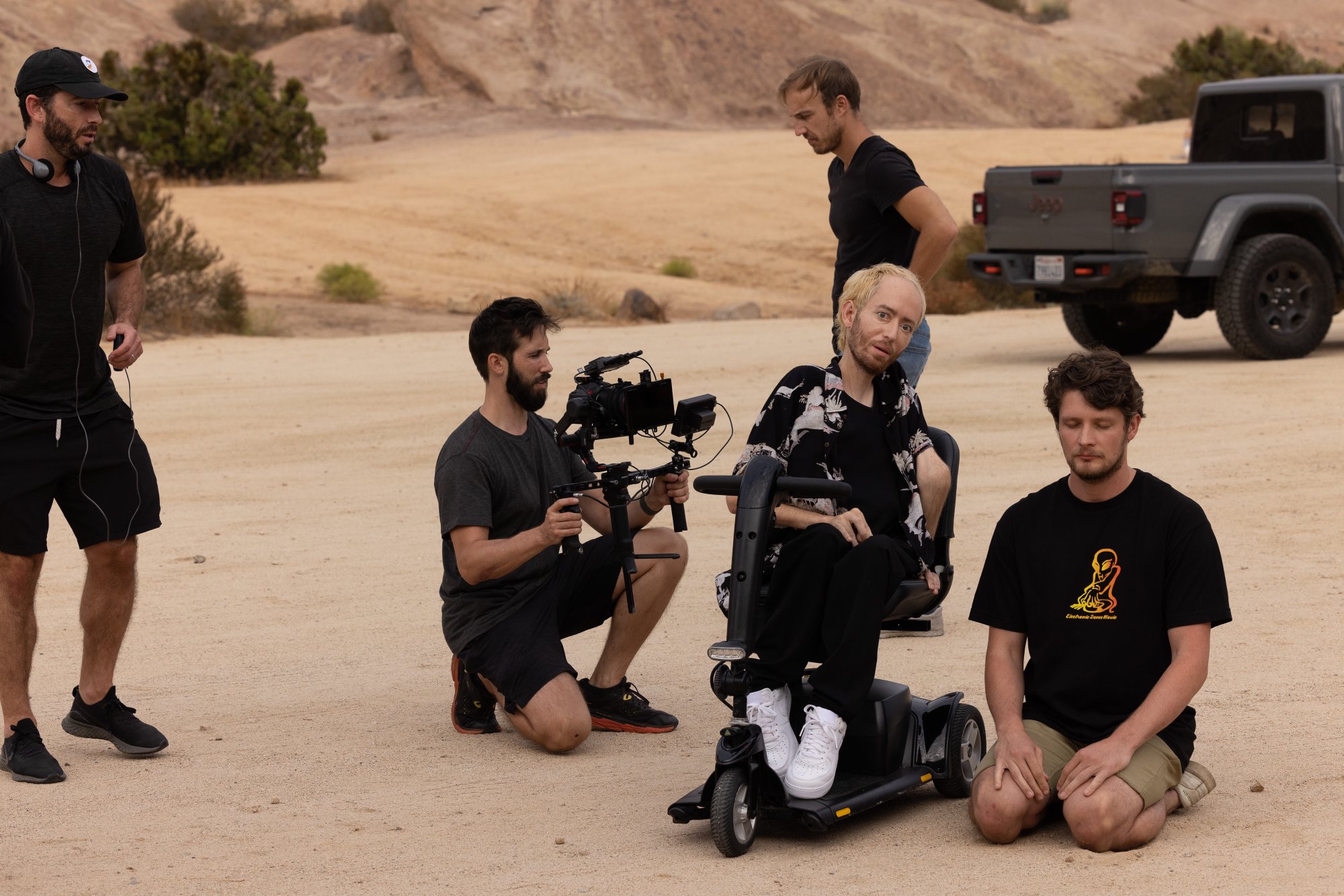
The biggest visual decision on this film wasn't about lenses or lighting — it was about point of view. Danny, our lead character, is confined to a wheelchair, and I didn't want to shy away from that. I wanted the audience to see the world as Danny sees it. That philosophy drove every framing choice.
On a practical level, this meant I was almost always shooting with Danny in the foreground. On a small budget we didn't have a lot of production design to fill the frame, so I used Danny's physical presence and the foreground to make every shot feel dense and full. A long lens compressed whatever elements we did have — the environment, the other characters, the architecture — into a richer, more layered image. The constraints became the style.
The Day-For-Night Palm Frond Trick
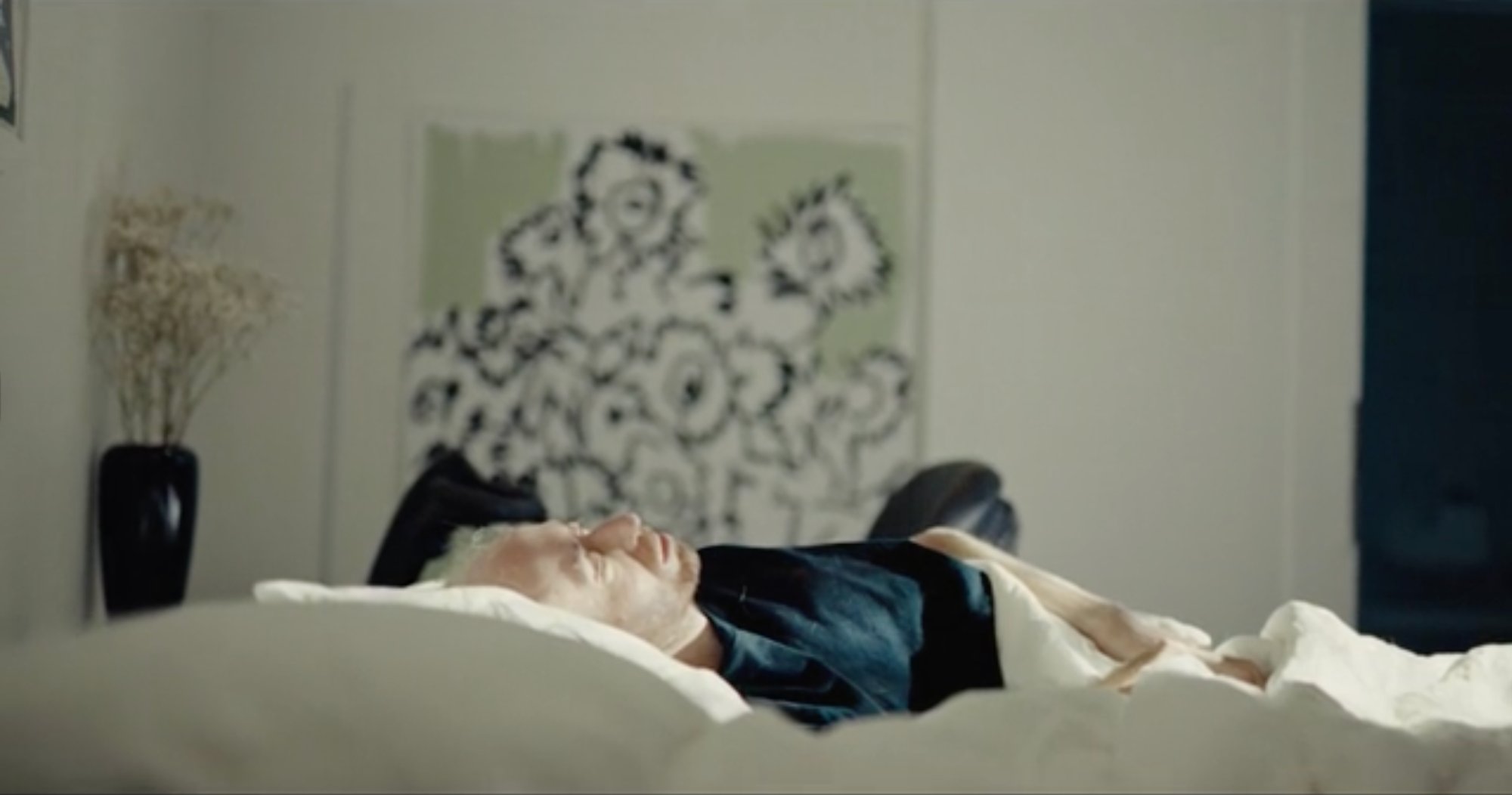
The opening scene of the film is Danny waking up in bed. It's supposed to be morning — warm Southern California daylight streaming in. We ran out of time to shoot it during the day. We had to shoot it at night.
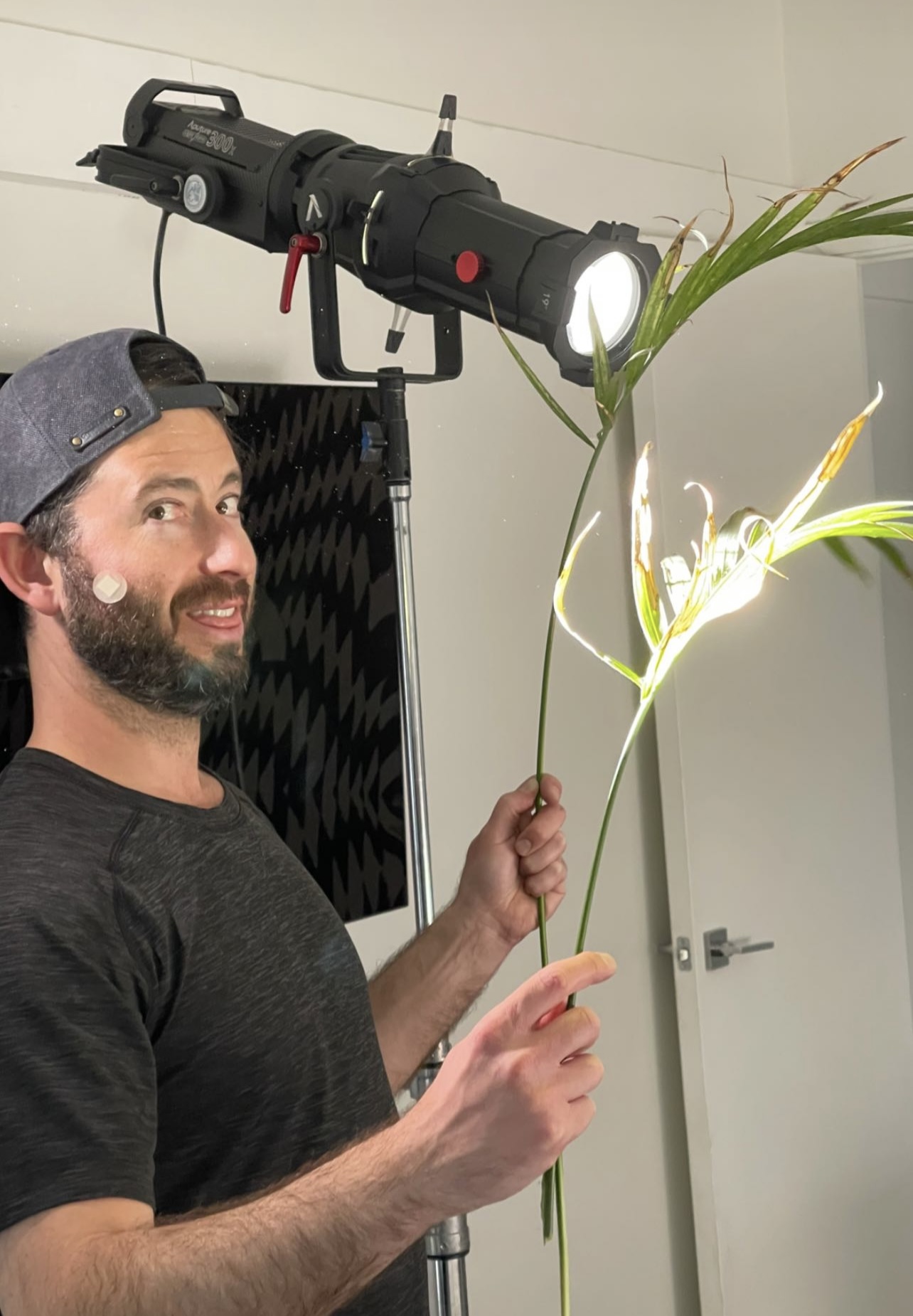
Using two Aputure lights at full blast, I created the daylight. The first unit hit the bed just below Danny's face so his eyes didn't get direct light — instead he was lit by the bounce off the white sheets. The second light hit the bathroom in the background. I exposed the camera for the ambient bounce and let the highlights overexpose, which created the daylight feel — that slightly blown-out quality you get from real sun.
The problem was coverage. The beams were sharp enough that if I went too wide, you'd see the edges where the light dropped off into darkness. So the day-for-night trick also dictated the framing. The shot looking straight down at Danny in bed? That angle exists because it was the only area that was fully lit.
But the real trick — the thing that actually sells it — is about a palm tree.
The Reshoot That Made The Film
We shot across several months during the summer, working 3-4 days a week, then editing and reviewing footage while planning the next week. Once we had a rough cut, it was clear that the first act wasn't working. So Shane and I, along with only the sound mixer and one of the producers, went back and reshot the entire first act over 5 additional days.
Here's the thing — the reshoot actually produced better images. By that point we had gotten so good working at a small scale that we knew exactly what we were getting into. We were more precise. We planned further ahead. The constraints were the same but our efficiency was refined. The result was stronger moments and better frames than anything we'd shot in the first pass.
The Approach: Calm, Casual, Intentional
A typical shooting day was deliberately casual. Because we were so small, we didn't stress. We embraced a slow approach and allowed everyone to get ready in their own way. Once everyone was in makeup, once I had lit the area where the scene would take place, we would just start exploring. No urgency. No screaming first AD. Just focused, calm work.
Shane and I scouted and planned everything using an app called Cadrage, which let us shotlist and create a shooting plan well before we ever arrived with the crew. We scouted a massive number of locations to make sure everything was perfect, because we had so little control over our environments. The precision happened in prep. The set was for discovery.
The Power Draw Problem
My go-to units were the Aputure 600x and 1200d. Here's why: I always had to plug my lights into existing household sockets. No generator, no distro. I needed something powerful enough to shape hard Southern California daylight but with a low enough draw to not trip a circuit breaker in a residential house. This was before the Aputure 2400B LED came out — if I'd had that light, a lot of these problems would have been solved differently.
What I Learned
Good Bad Things won the Grand Jury Prize and the Audience Choice Award at Slamdance. That recognition felt like validation — not of the laurels, but of the approach. We all worked incredibly hard on this passion project, and to be recognized by our peers felt so good. While we were making it, I genuinely felt this was a very special project. It turns out I was right.
The film taught me that constraints aren't limitations — they're the visual language. Every creative solution on this film came from not having enough: not enough crew, not enough lights, not enough daylight, not enough production design. And every one of those constraints pushed the cinematography toward something more honest, more intentional, and ultimately more powerful than a well-funded version of the same film would have been.
Good Bad Things is now streaming on Hulu.
← back to all work