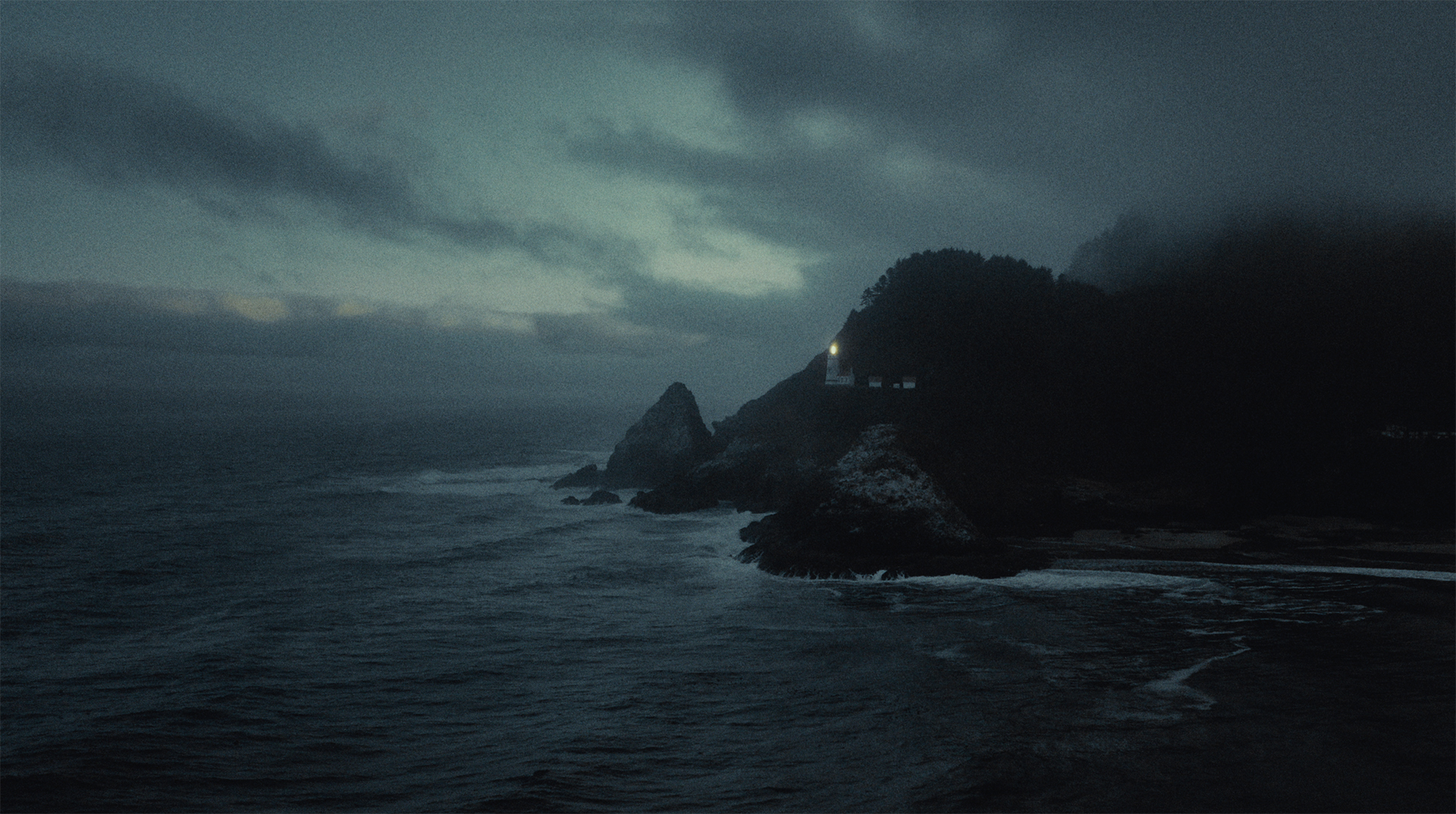
Dead in the Water
Directed by Nanea Miyata
A COVID Production
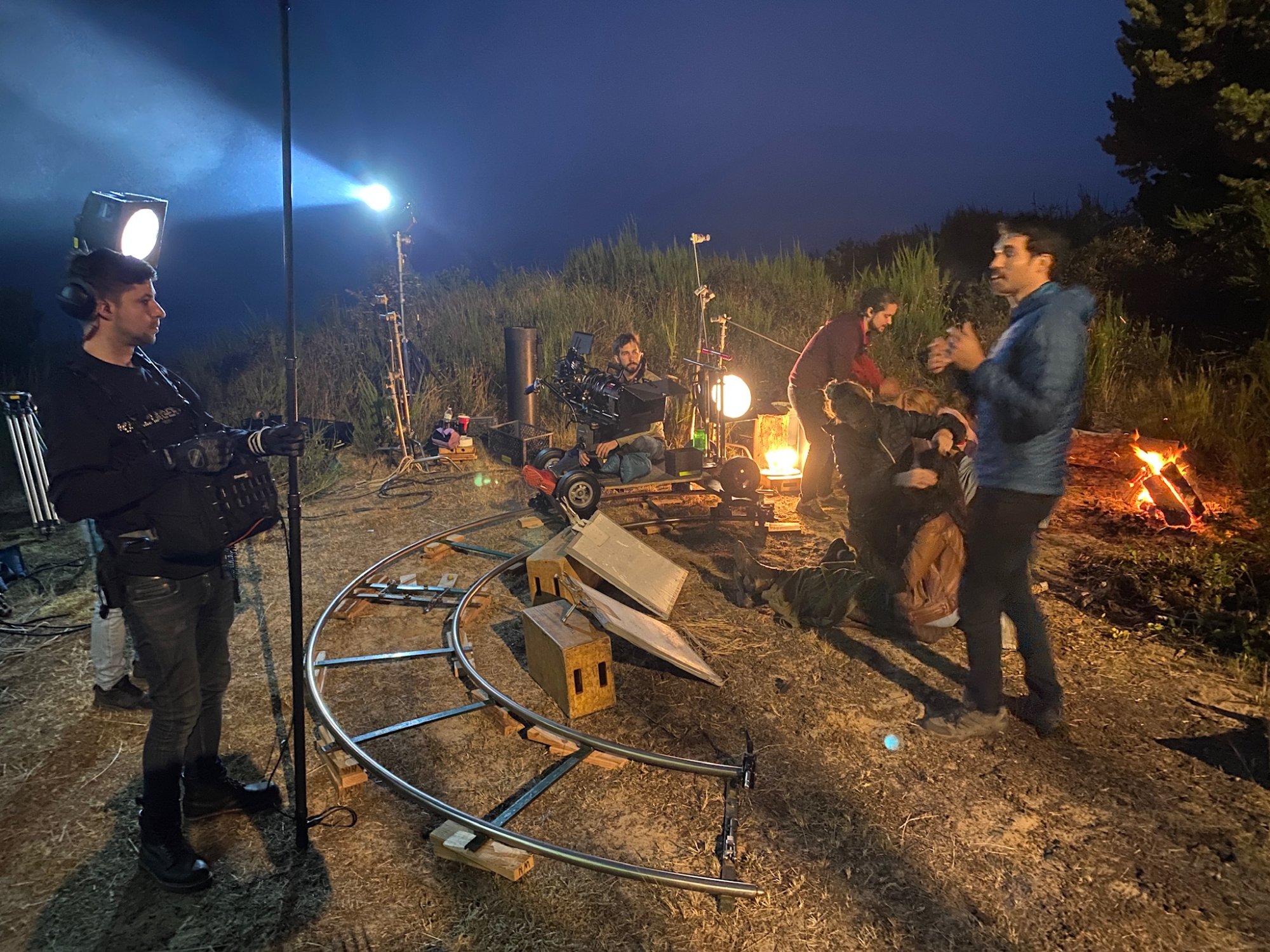
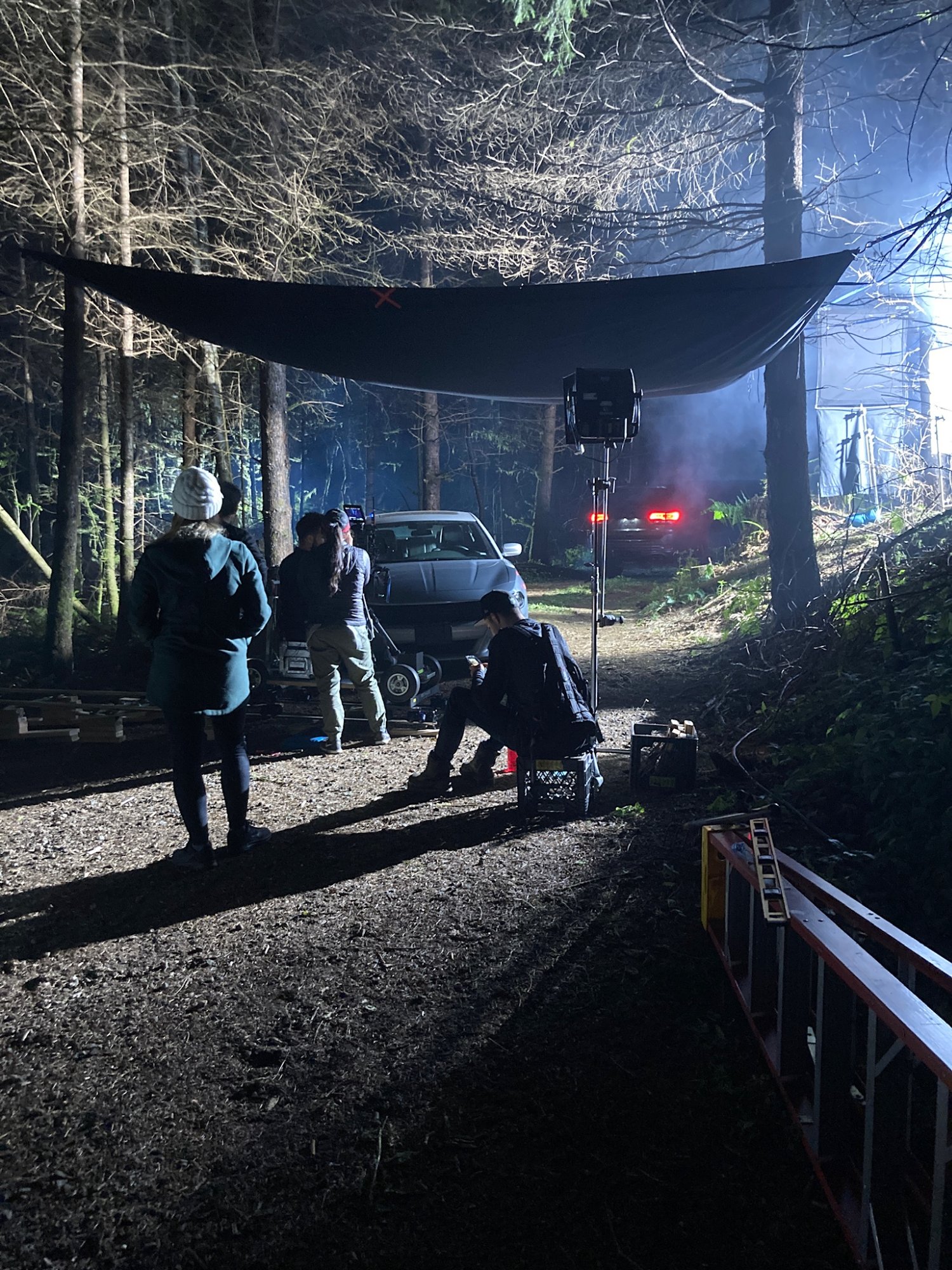
Dead in the Water was shot in June and July of 2020 — deep in the first wave of COVID. We self-funded the entire production and shot in Florence, Oregon, using a VRBO mansion rental as our primary location. The entire cast and crew was twelve people. No crew department was more than one or two deep.
The premise: when aspiring photography vlogger Tara gets dumped by her long-term boyfriend, her best friend Amy takes her on a weekend getaway to her family's vacation lake house, where a mysterious and effortlessly attractive man crosses their path. It's a romantic thriller — the kind of genre that lives and dies on atmosphere and tension.
Army of One
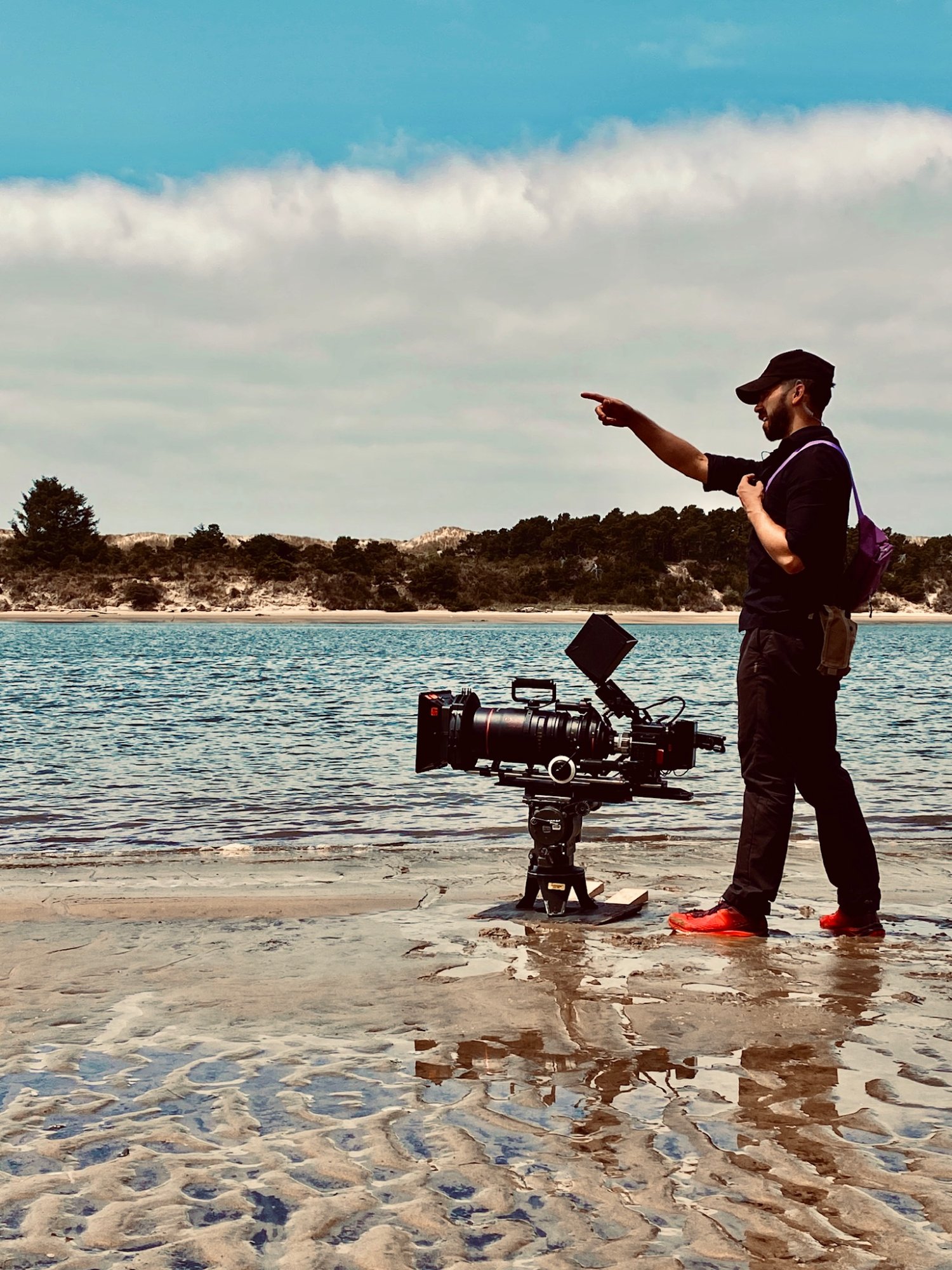
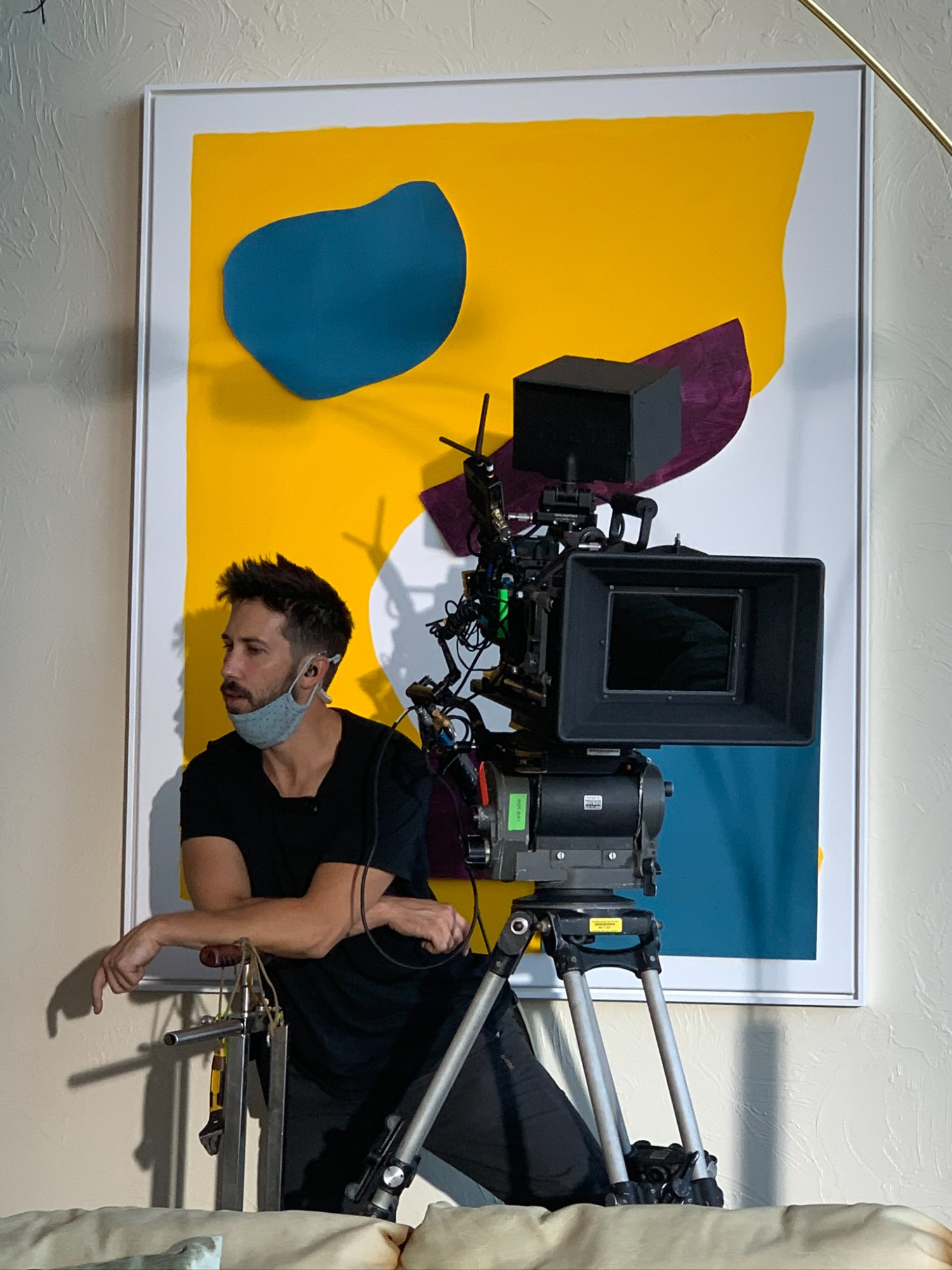
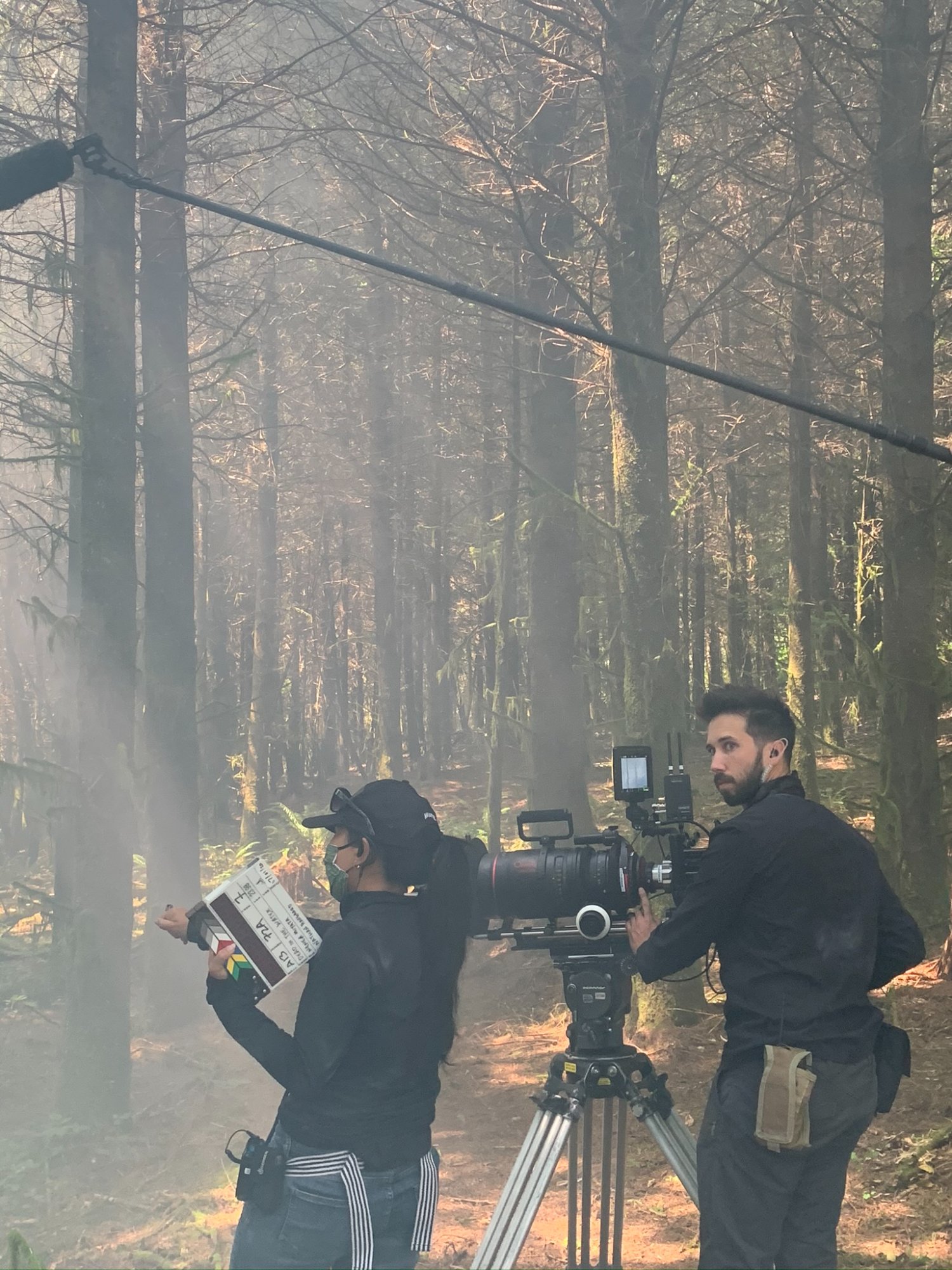
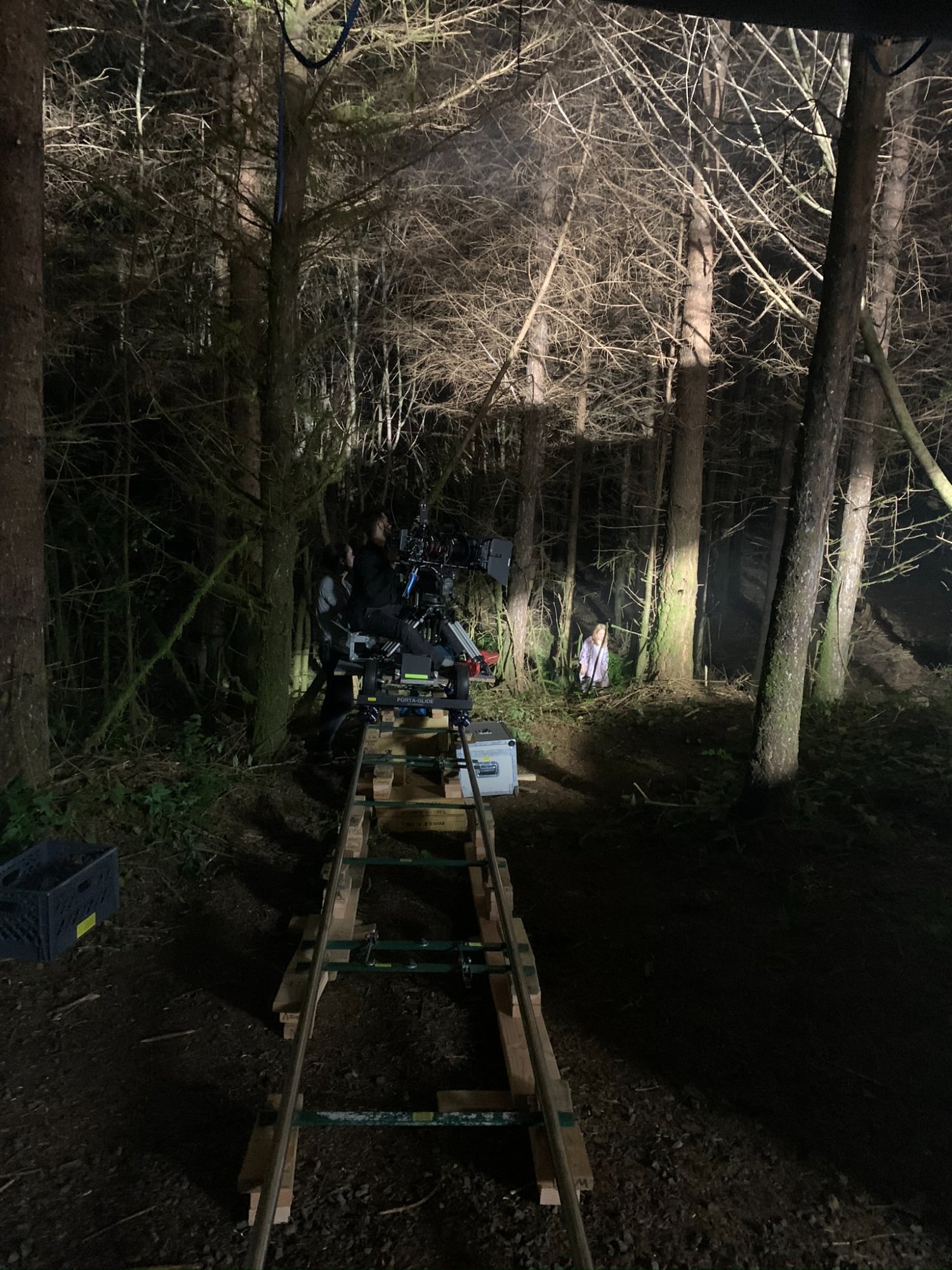
With no crew to speak of, I was operating camera on a dolly being pushed by a PA, using the electronic zoom on the Optimo 24–290mm, and pulling my own focus — all at the same time. The camera was a RED Gemini 5K on heavy Mitchell sticks, which I carried around by myself. At one point I even shot a scene handheld with that fifty-pound camera rig. Just because it's a small crew doesn't mean you compromise on the look.
The intro and outro were shot on Sigma Art primes at T1.4, giving those sequences a distinctly different texture from the body of the film. Everything else was shot on the Optimo zoom — a lens that gave me the flexibility to reframe on the fly without swapping glass, which was essential with no AC.
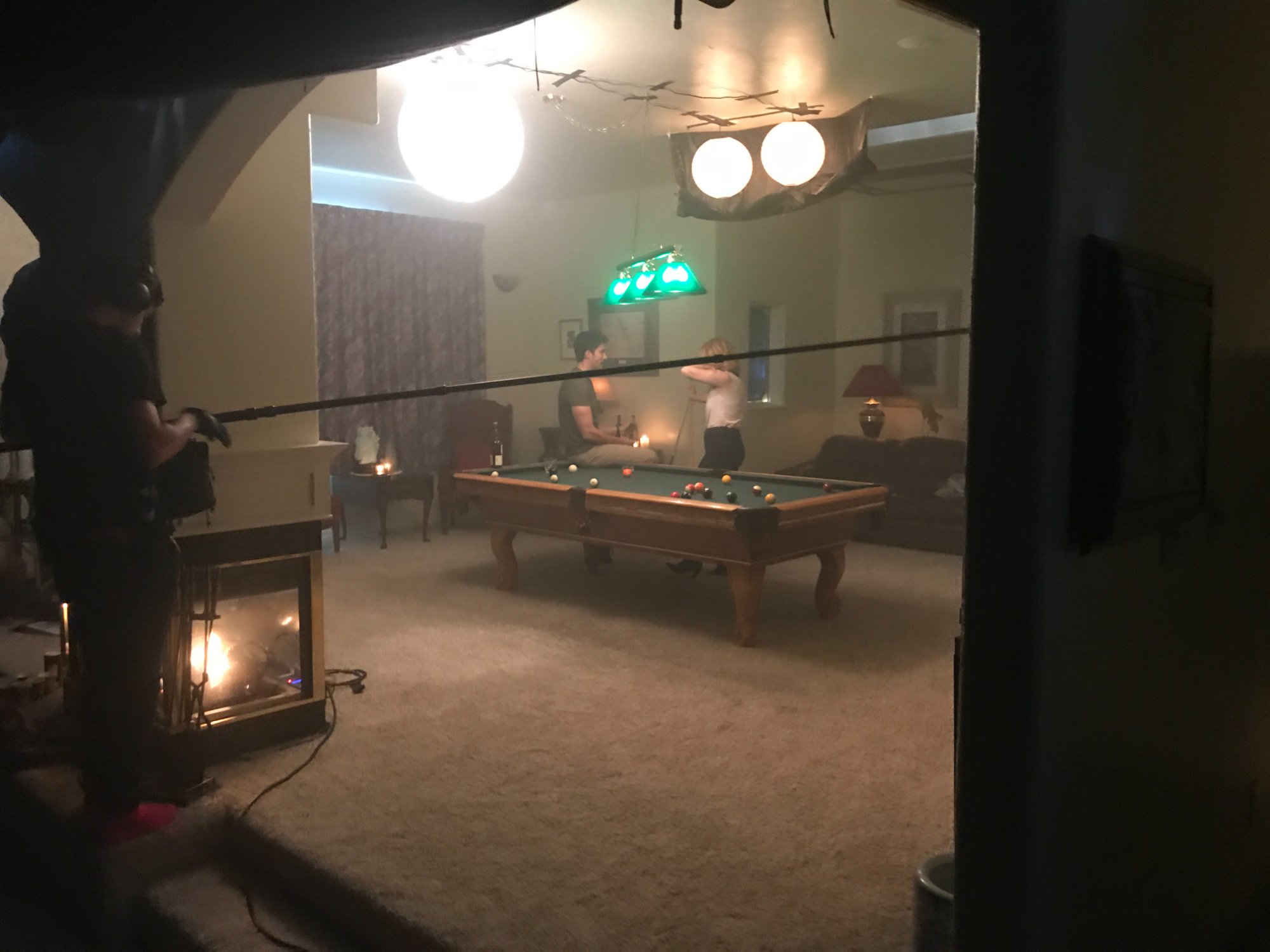
The Blackout Tent
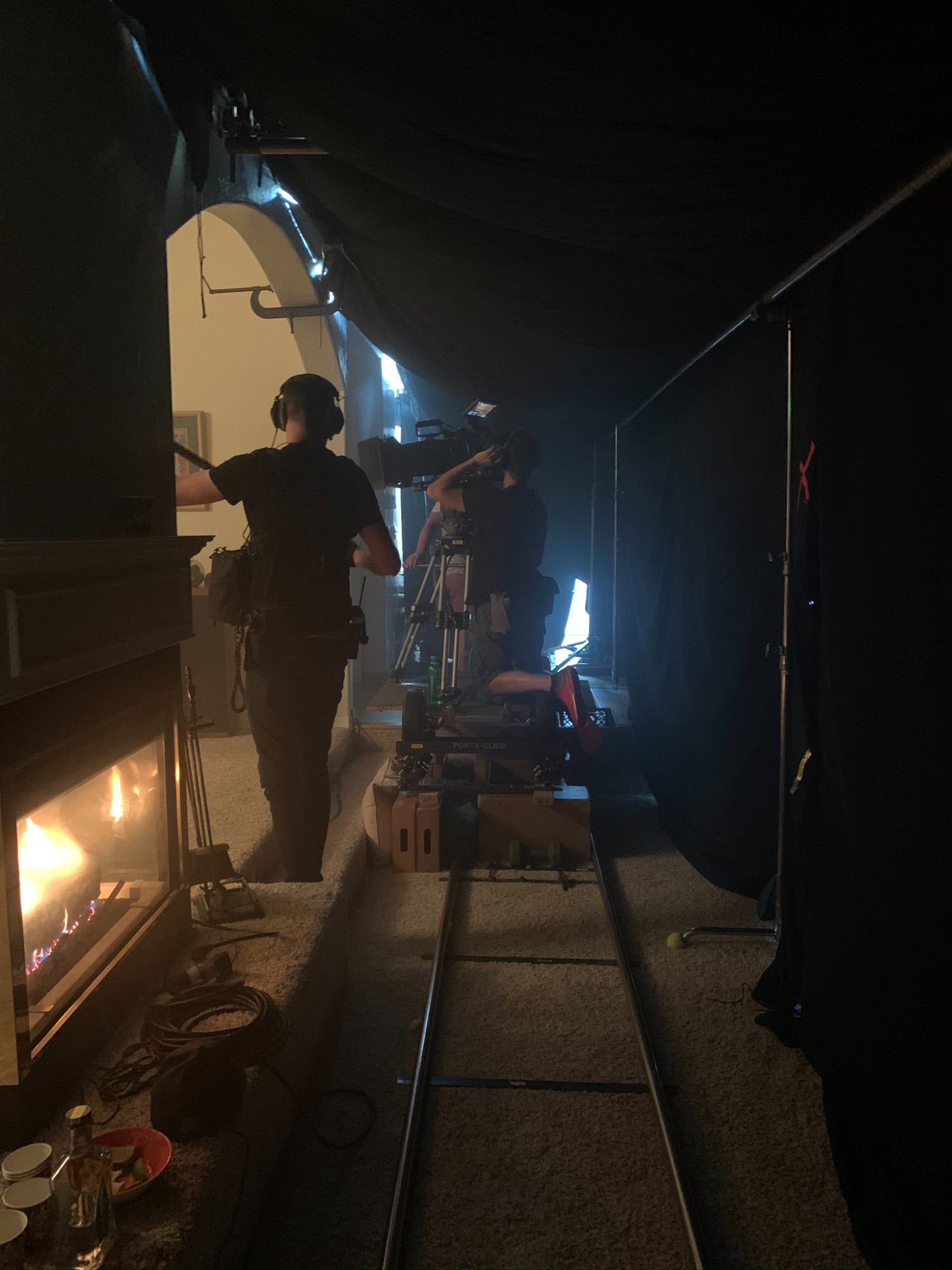
We were shooting in the dead middle of summer in Oregon. The nights were impossibly short, but the story required extensive night interior sequences. My gaffer and I built a massive blackout tent inside the mansion — floor to ceiling, duvetyne and speedrail, creating a completely light-controlled environment in the middle of a living room with floor-to-ceiling windows. It took us two hours to build. We shot one long sequence inside it, then tore it down and rebuilt it in another room the next day.
We had to repeat this approach throughout the shoot. The summer sun wouldn't cooperate with our schedule, so we brought the night to us.
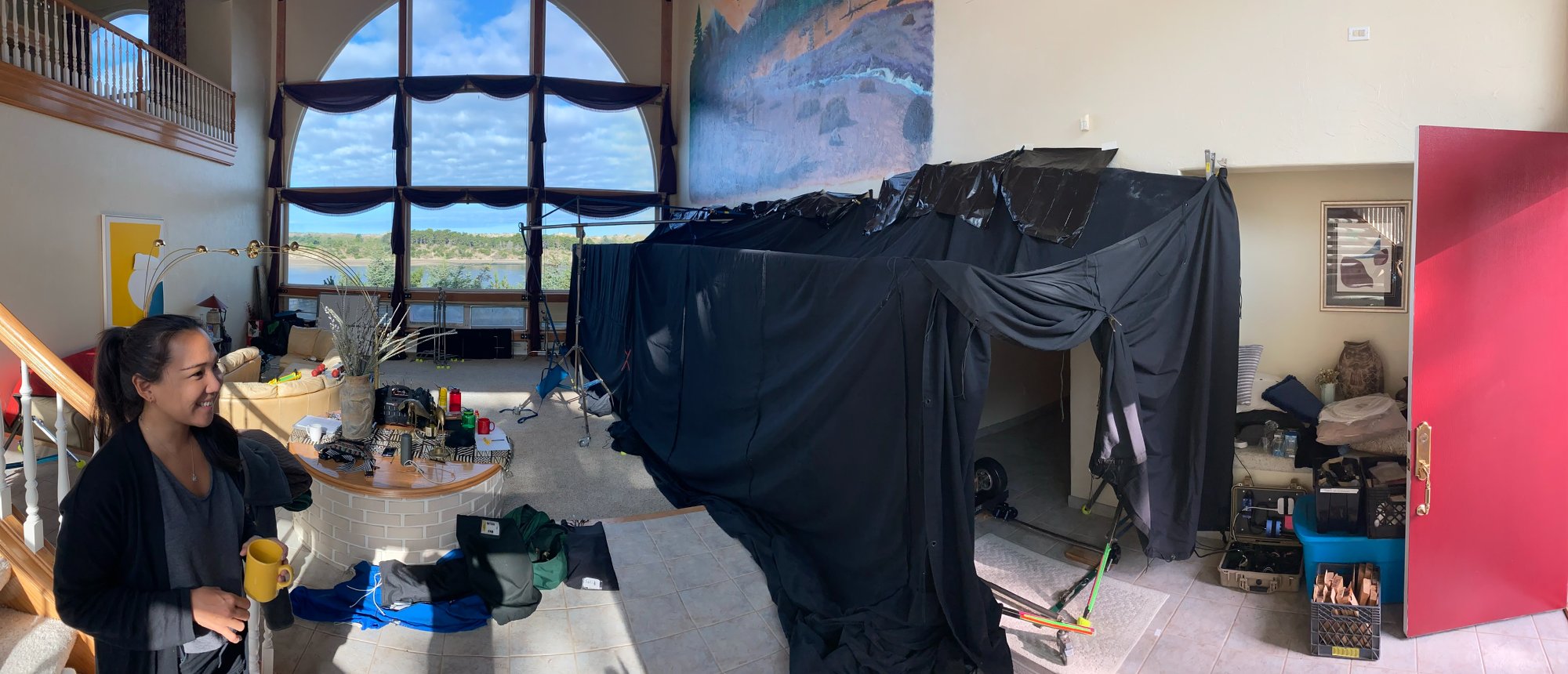
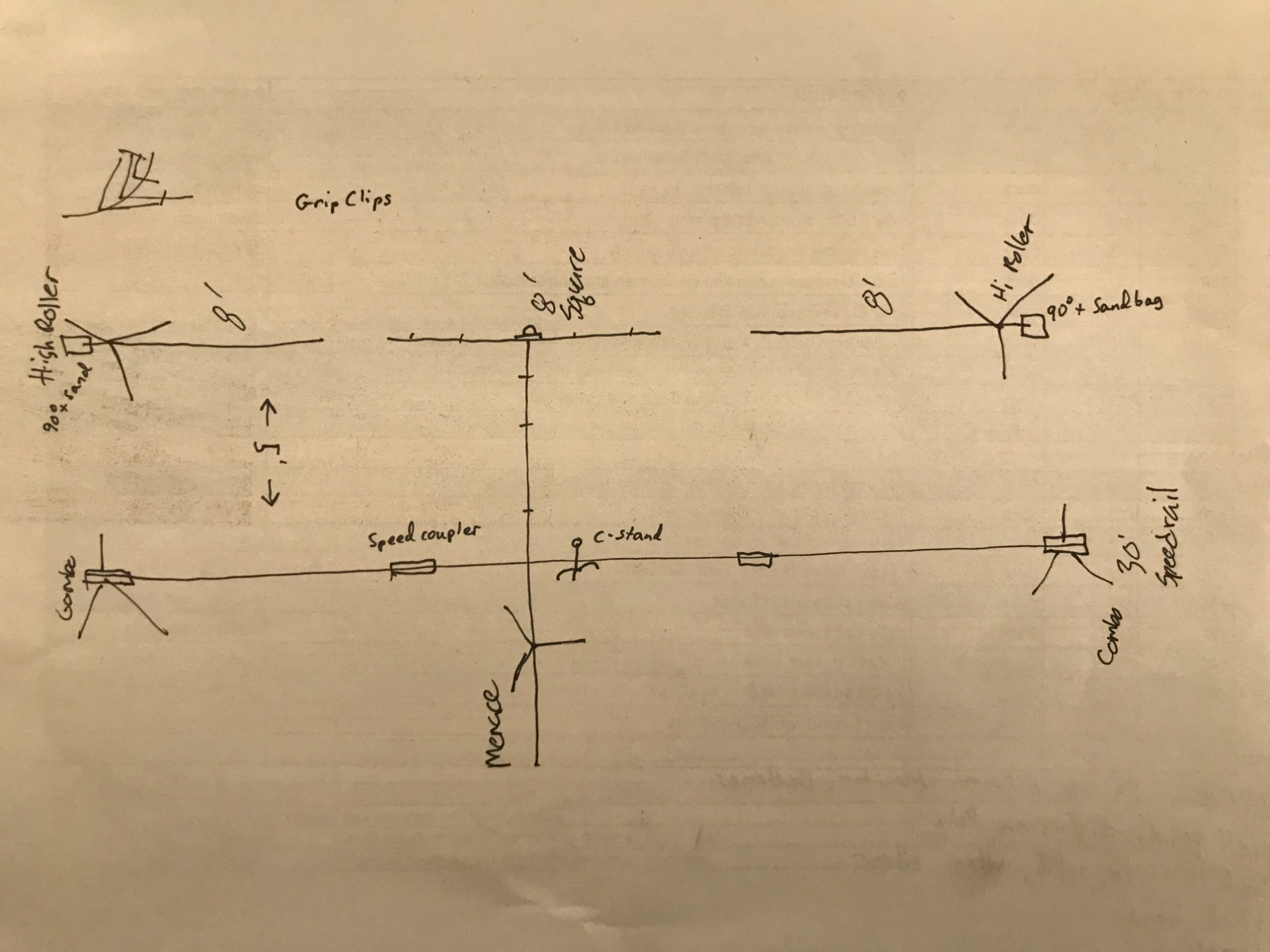
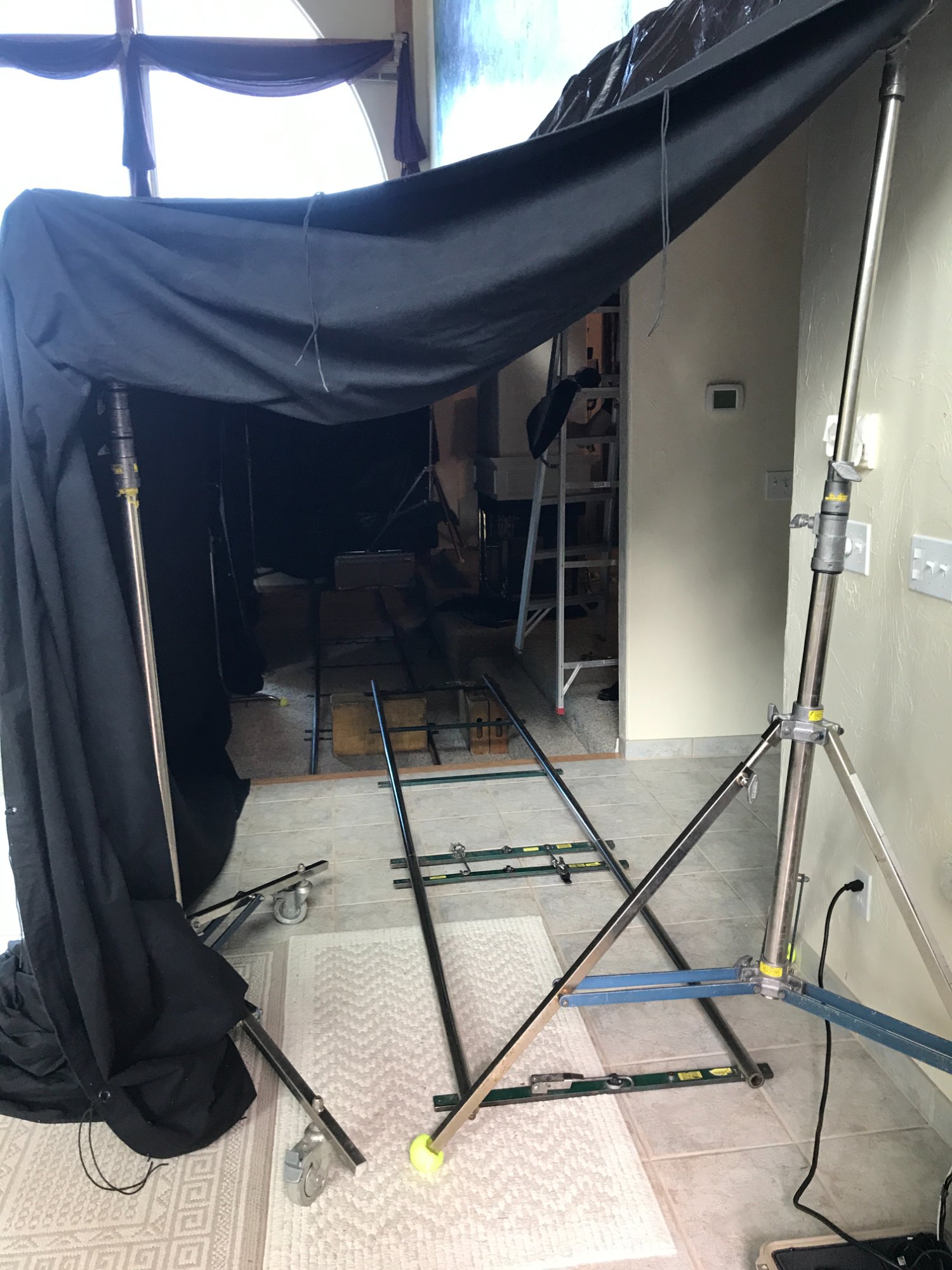
Day for Night in the Forest
Half of the final night exterior sequence was shot day for night. We built a custom smoke machine — nicknamed the "tube of death" — and smoked up the local forest, then exposed for the highlights and pretended the high afternoon sun was moonlight. I monitored my look on set using a day-for-night LUT, and the bulk of the final work was done in the color grade.
Sold to Lifetime
What we pulled off with twelve people, no infrastructure, and a VRBO mansion during a global pandemic was remarkable. The film was picked up and sold to Lifetime. It's proof of something I keep learning on every micro-budget project: the camera doesn't know how many people are behind it.