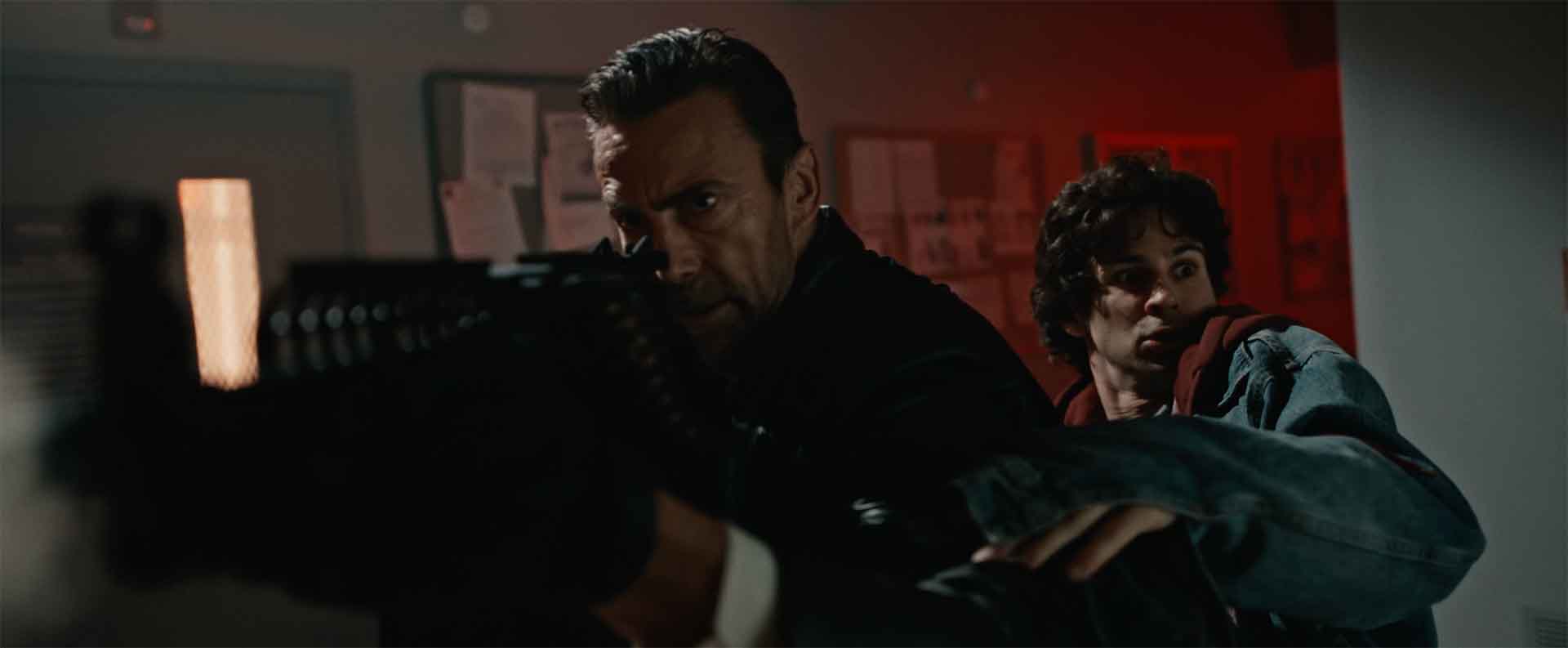
Instakill
Directed by Garrett Warren
The Second Attempt
Garrett Warren has been trying to make the jump from stunt coordination to directing for years. He's the 2nd Unit Director and Stunt Coordinator of the Avatar franchise. The studios he'd been pitching told him the same thing: we need to see you direct narrative alongside action. They needed proof he could do both.
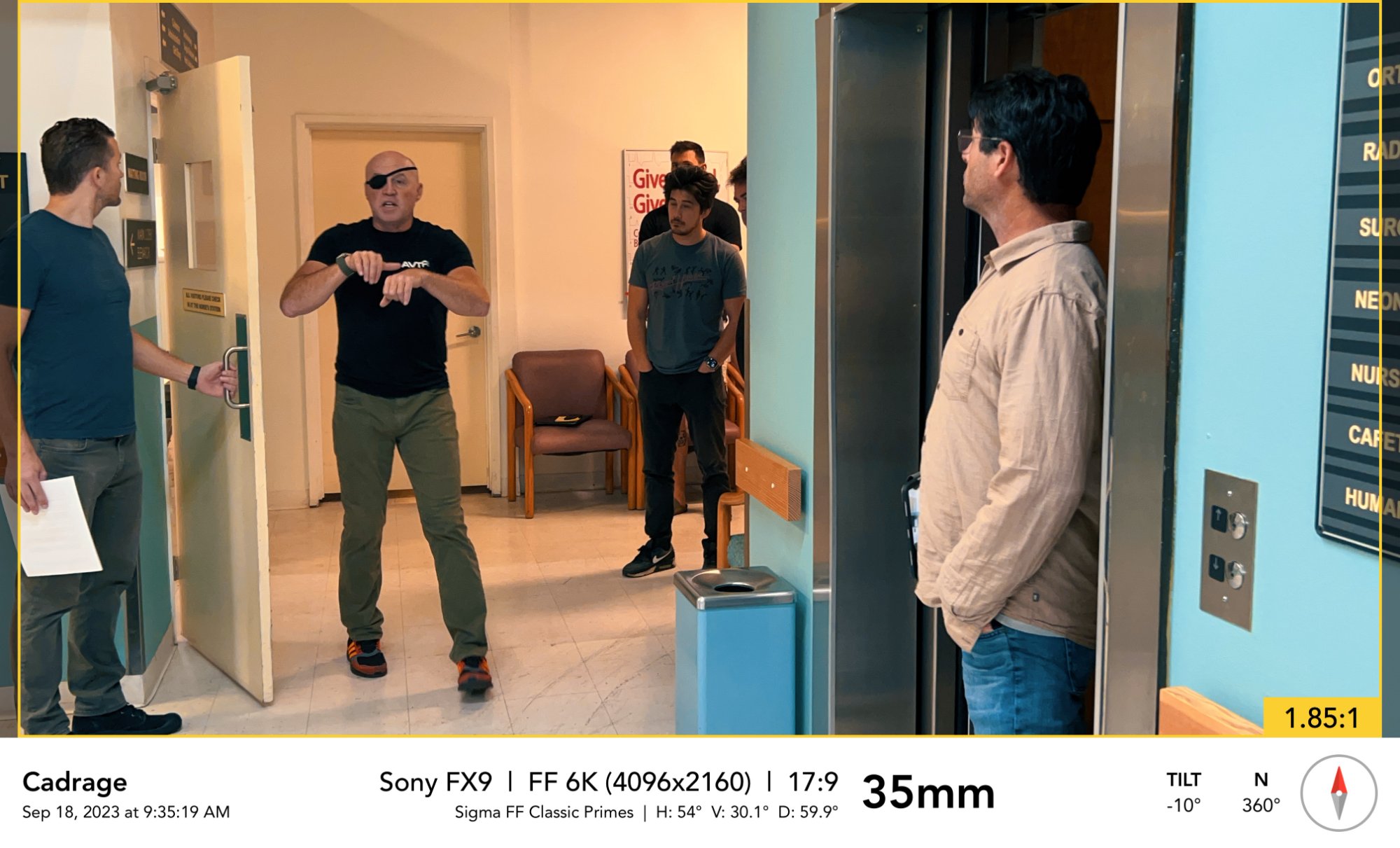
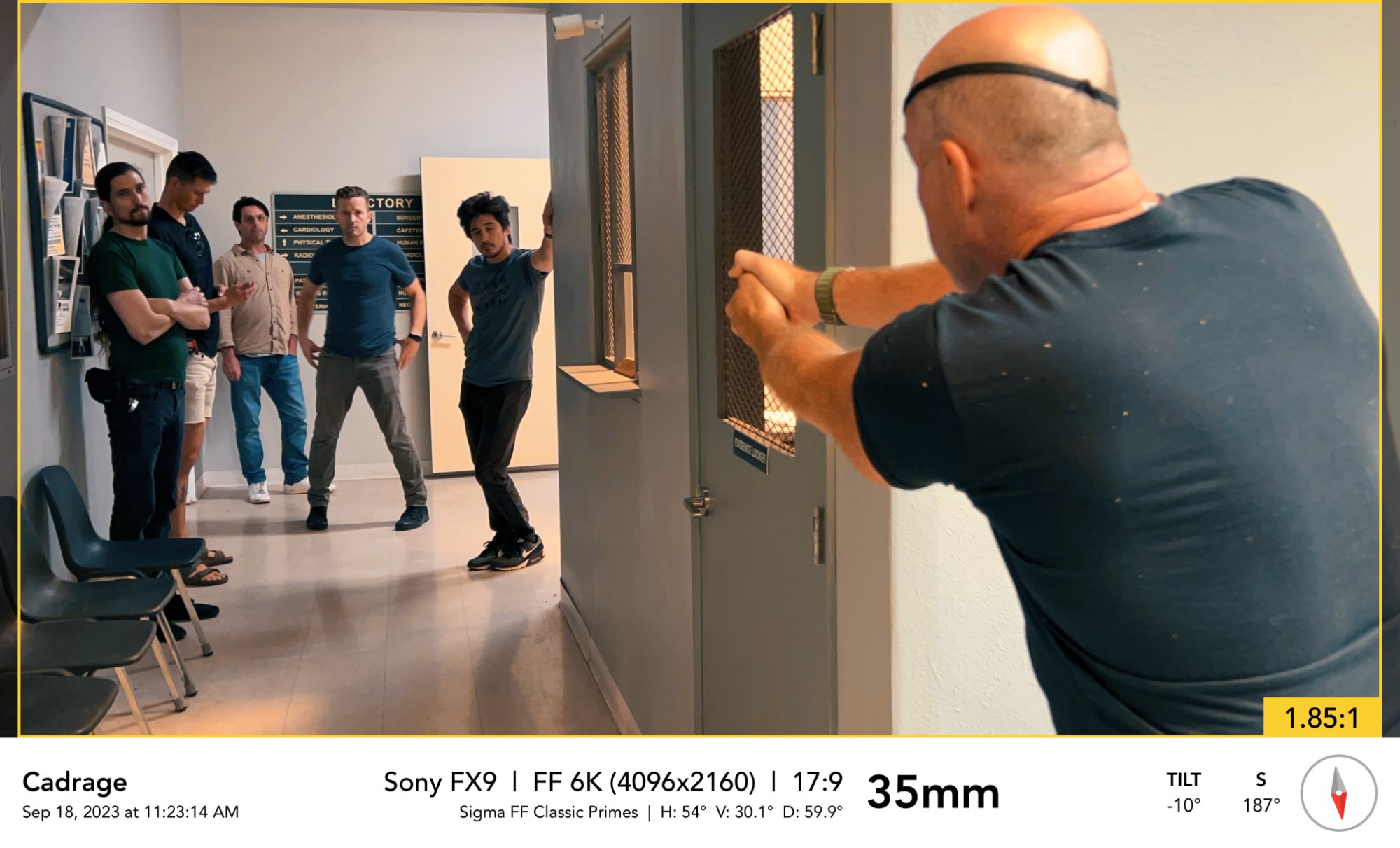
The first attempt at Instakill was a bare-bones effort — no crew, no DP, no lighting. The result wasn't good enough. Garrett called me and asked me to come scout a hospital set with him on a sound stage in LA. It was on that scout that I learned this was the second try. He needed it to work this time.
The Hollywood strikes were in full swing, which meant nobody was working. That was good for us: talented crew were suddenly available and willing to work for almost nothing. Garrett and I each put in five thousand dollars to pay the crew and rent a minimal gear package. We got deals on everything. What we executed for ten thousand dollars is nothing short of extraordinary.
Previs at the Freerunning Academy
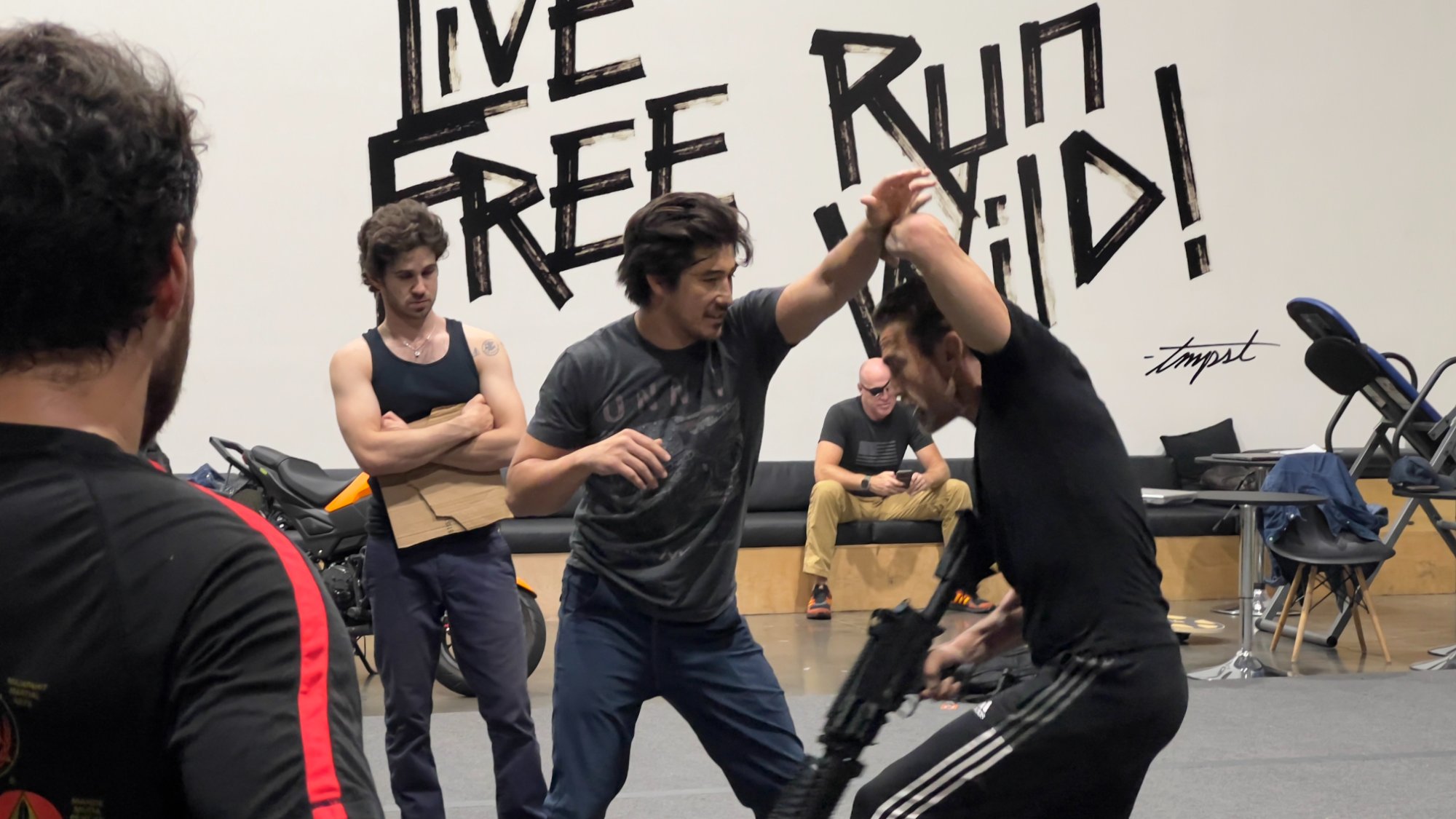
Before we ever stepped onto the sound stage, I filmed the previs with Steve Brown — Garrett's assistant stunt coordinator from Avatar — at the freerunning academy in Northridge. This is where the fights were choreographed and rehearsed. Garrett and Steve would work through the sequences, I'd shoot them on a handheld camera, and we'd review the footage together to figure out which angles told the story and which moves were going to be dangerous to shoot close. By the time we arrived on set, the camera choreography was already built.
The T2 Reference
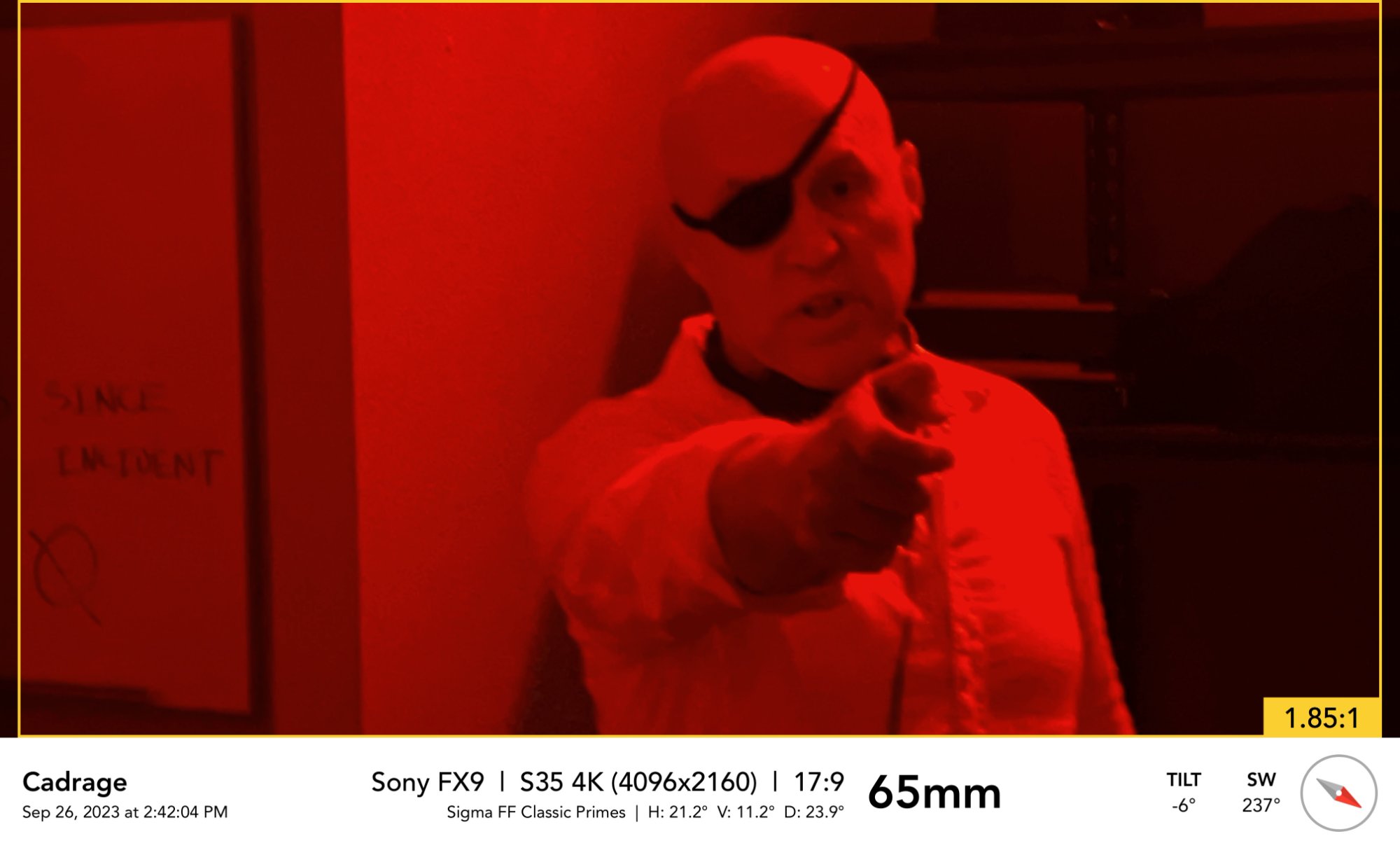
Garrett's strongest visual reference was the police station attack from Terminator 2. He wanted it dark. He wanted skin tones to read naturally. And the only color that would appear in the frame was red. That became the rule. Every lighting choice, every production design decision, every wardrobe call filtered through that constraint: darkness, skin, and red. Nothing else.
One Set, Six Looks
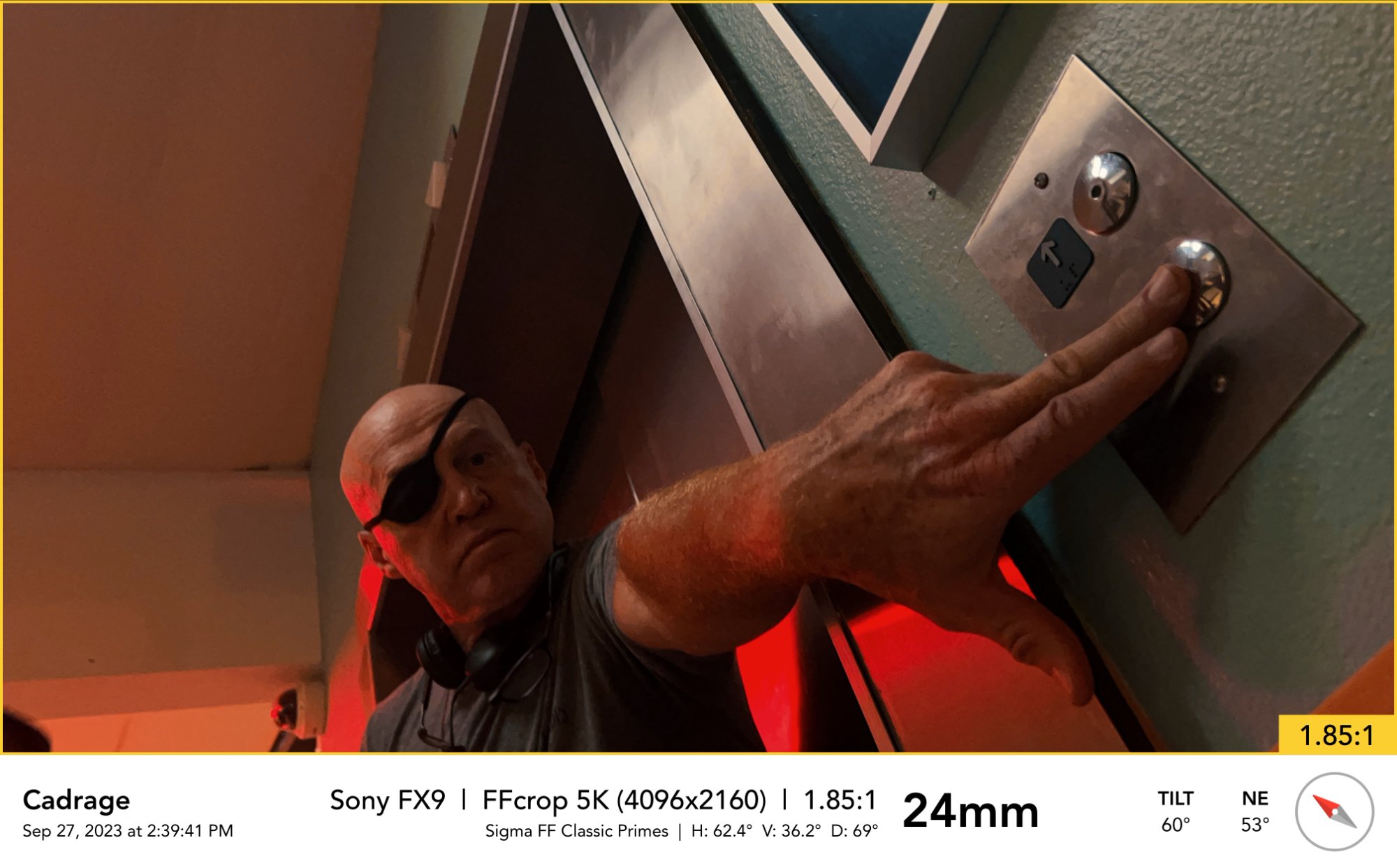
We had one small set — a hospital interior — and we needed it to feel like a much larger space. Over three days, I relit and redressed that set six times. We'd shoot one section, wrap it, and while the art department flipped the dressing on that half, I'd be lighting the other side. Then we'd swap. Back and forth, all day, relighting and redressing as soon as we left one area. The final sequence you see on screen — a character moving through what feels like an entire building — was built from two sections of the same stage, shot from different angles under different light.
The key was making each setup feel distinct enough that the audience never questions the geography. Different color temperatures in different zones. Different practicals. A shift in ceiling height using flags and negative fill. It's the kind of problem-solving that only happens when you have no money and no choice.
174 Shots in Two Days
Garrett's shot list was 174 setups across two days. We added a third day when we ran out of time. That's a pace that would be aggressive on a studio feature with a full crew and unlimited resources. We were doing it on a sound stage in LA with rented Sonys and five thousand dollars each.
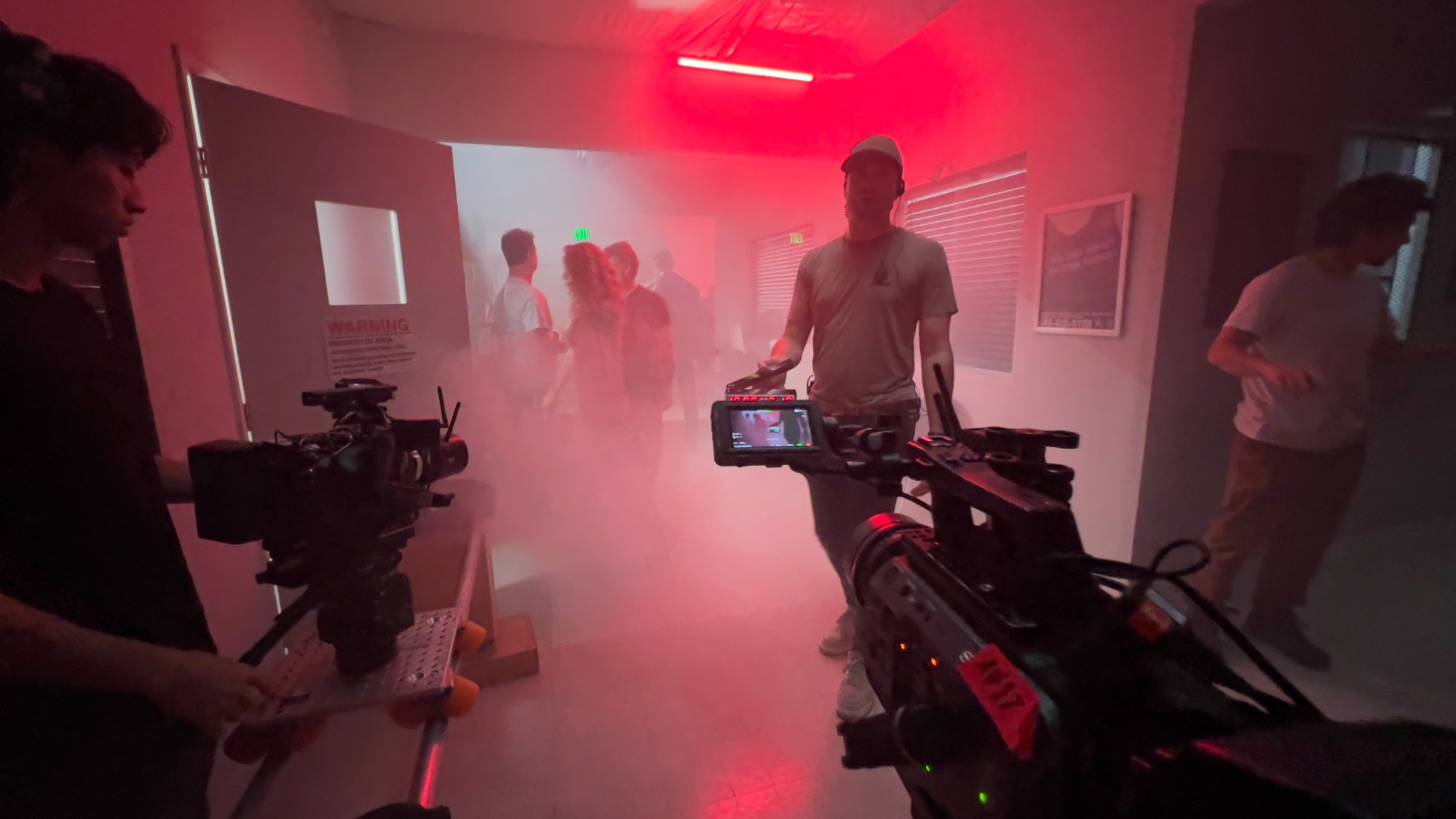
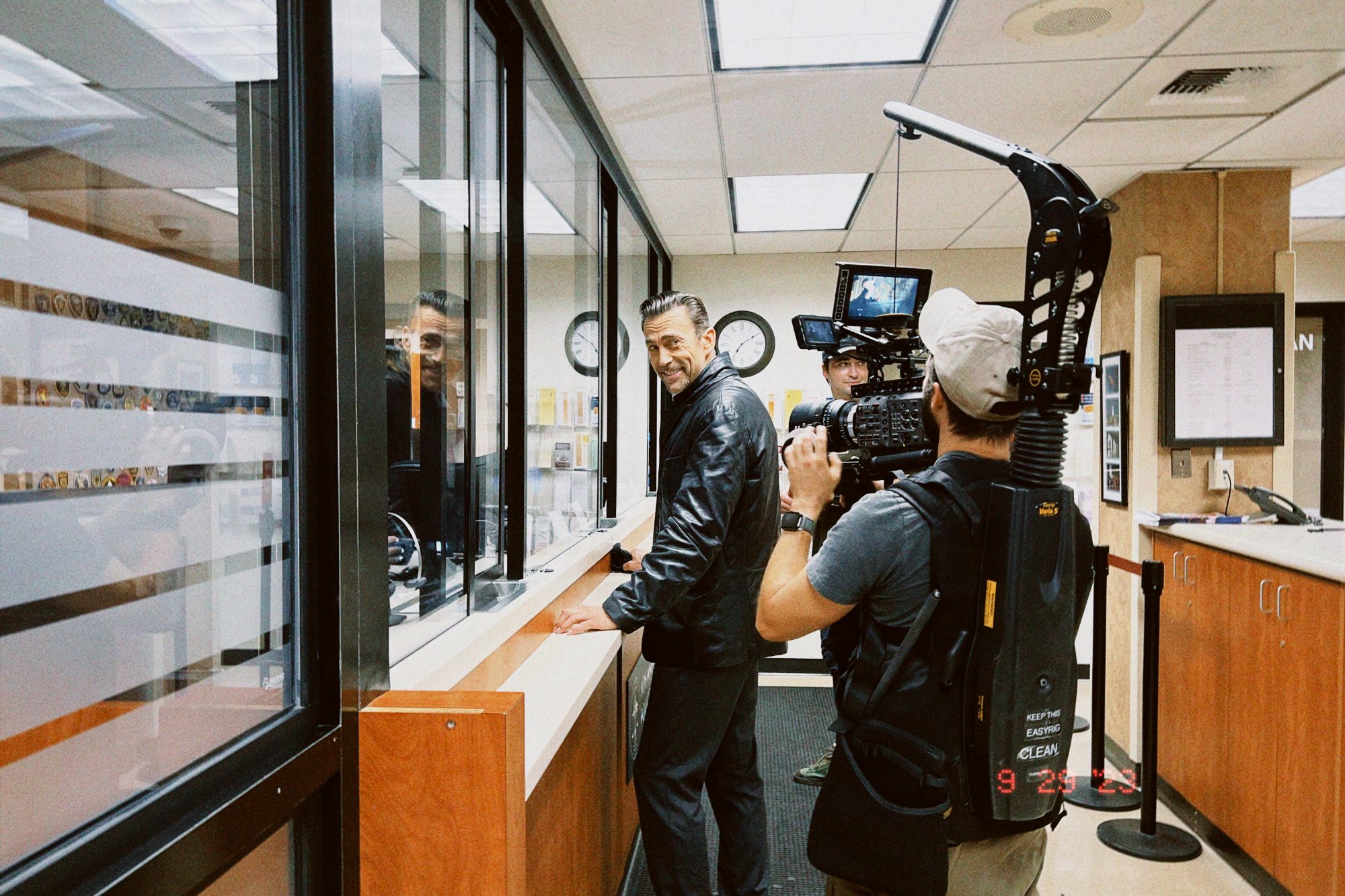
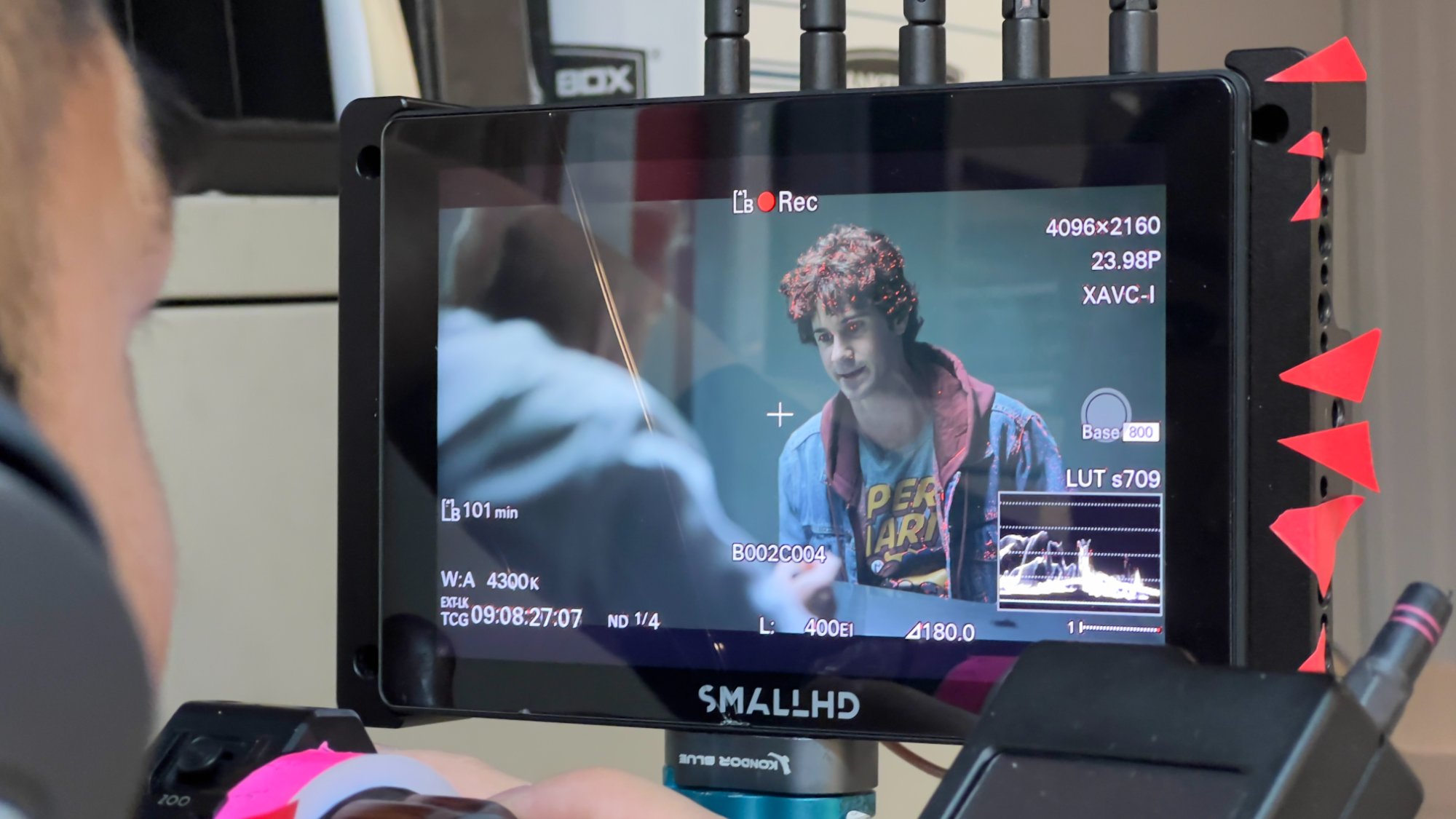
Every fight scene was shot with four handheld cameras, but the action was always built around a hero A camera. The other cameras grabbed pieces and cutaways. I always operated A cam because I'd developed the previs with Steve Brown and knew the choreography inside out. The interrogation scenes were shot multicam with three cameras — two on Dana dollies and one locked off. With the exception of one beautiful shot by Steadicam operator Devin Jamieson, the entire project is handheld.
Garrett is demanding in the way that only a stunt coordinator can be. He has an exact image in his head and he will make you repeat a move until it is executed precisely as he sees it. There's no improvisation on his action. You hit the mark, you match the speed, you nail the framing — or you go again. The stunt performers don't get unlimited takes. Once Garrett was happy with a stunt, there was no redoing it for focus. That meant the focus pullers — working for barely any money — had to be perfect on the first take that mattered. They were.
What Instakill Proved
Instakill exists because of the relationship Garrett and I built starting in 2015. He handed me his phone on the set of Orphans of the Void, brought me onto Avatar, and then trusted me to be his DP on the project he'd been trying to get right for years. That's a decade of working together leading to this.
The film proved what Garrett needed it to prove: that he can direct narrative and action with equal control. It proved what I already knew about micro-budget filmmaking from Good Bad Things — that constraints aren't limitations, they're the visual language. And it proved something I tell every young cinematographer who asks me for advice: the camera doesn't know what the budget was.
← back to all work